
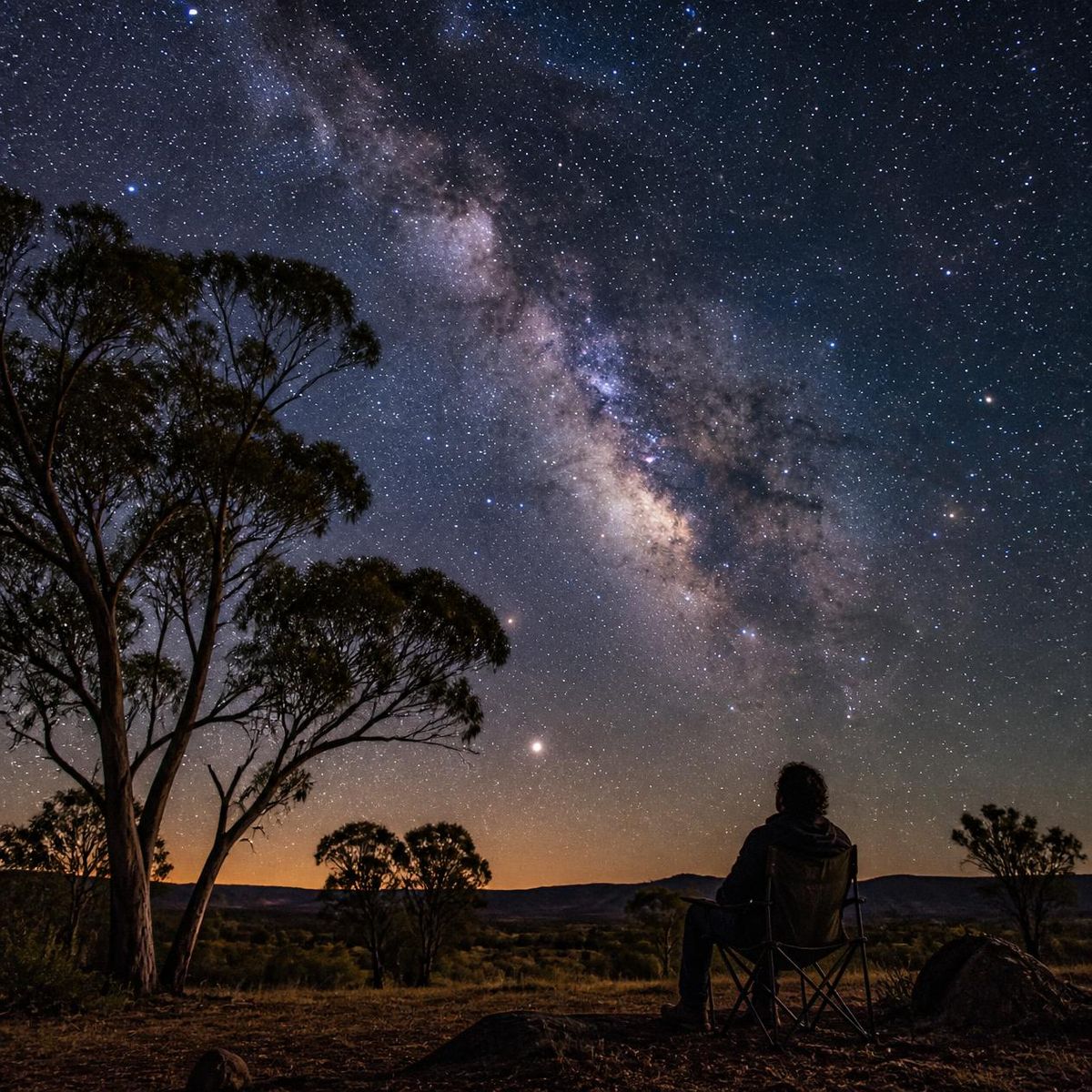
The Ultimate Queensland Stargazing Guide
From ancient volcanic landscapes to Outback horizons and coastal national parks, Queensland is home to some of Australia's most spectacular stargazing destinations. As astro-tourism continues to rise in popularity by 100% in the last three months, more travellers are venturing beyond the city lights in search of pristine night skies, meteor showers and unforgettable camping experiences.
To help inspire safer adventures, LifeFlight has identified Queensland's best stargazing locations, ranking each destination based on dark sky quality, accessibility, weather conditions during spring and nearby camping opportunities.
LifeFlight Australia said Queensland is home to some of Australia's most spectacular night skies, with more people embracing camping, road trips and astro-tourism to experience them. We wanted to shine a light on some of Queensland's incredible stargazing destinations while encouraging people to get out and explore the state safely.
Whether you're planning a weekend camping trip or an Outback road adventure, these destinations offer some of the state's most breathtaking views of the Milky Way along with a reminder to prepare before heading off the beaten track.
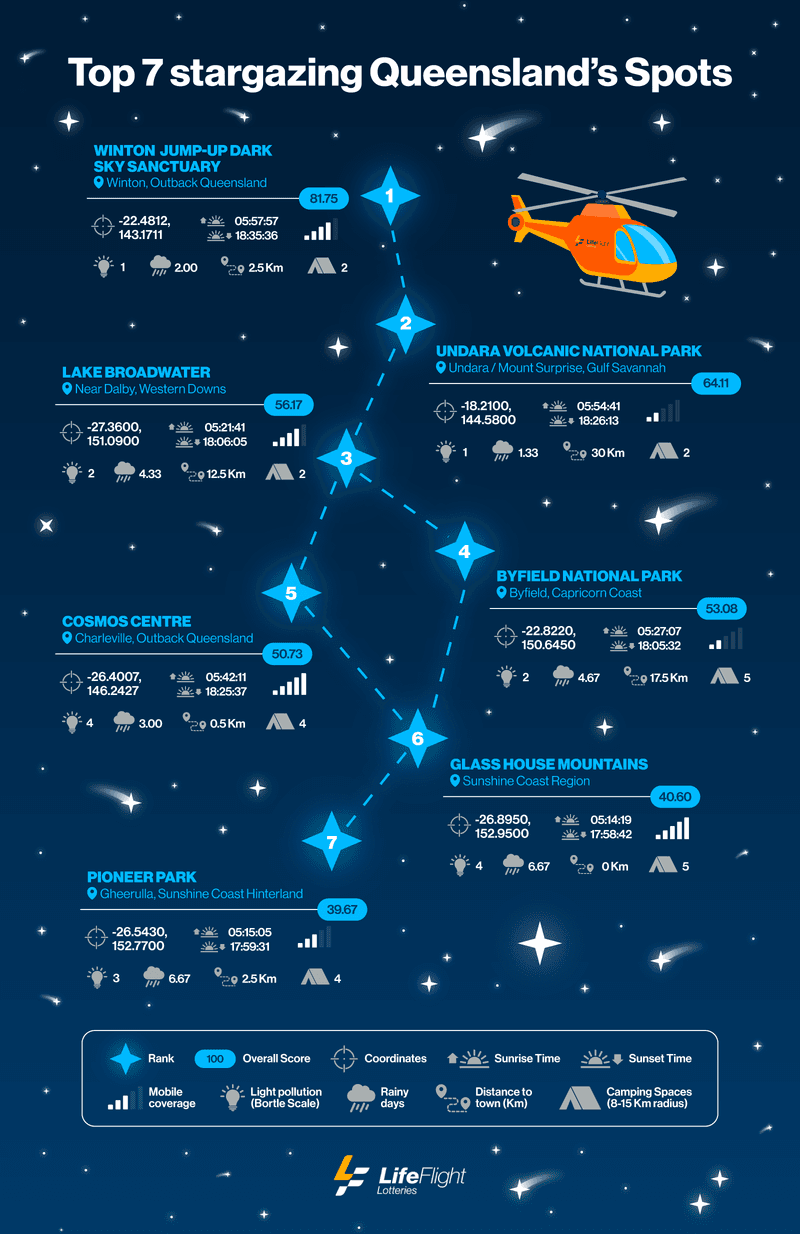
Queensland's Top 7 Stargazing Destinations
1. Winton Jump-Up Dark Sky Sanctuary, 81.75 / 100
Winton has become a bucket-list destination for astronomy enthusiasts from around the world. By day, visitors can explore nearby dinosaur attractions before watching one of Queensland's most spectacular night skies unfold after sunset.
With a Bortle Scale rating of 1, just 2.5 kilometres from town and an average of only two rainy days during spring, Winton offers some of the state's most reliable stargazing conditions.
2. Undara Volcanic National Park, 87.63 / 100
Undara Volcanic National Park in the Gulf Savannah takes second place, thanks to its exceptional combination of pristine dark skies, favourable weather and remote wilderness setting. Home to one of the world's longest lava tube systems, formed almost 190,000 years ago, Undara offers an unforgettable experience both above and below ground.
With a Bortle Scale rating of 1, the darkest classification possible, Undara offers some of the clearest night skies in Queensland. The park also records an average of just 1.33 rainy days, increasing the chances of cloud-free viewing.
Located approximately 30 kilometres from the nearest town, the park offers a true escape from light pollution, with camping available nearby for travellers wanting to spend the night beneath the stars.
3. Lake Broadwater, 56.17 / 100
Located near Dalby, Lake Broadwater offers the perfect blend of accessibility and dark skies. As the only naturally occurring freshwater lake in the Western Downs, it's a favourite among birdwatchers and nature lovers, with hundreds of bird species recorded throughout the reserve.
The site boasts a Bortle Scale rating of 2 and sits only 12.5 kilometres from town, while experiencing an average of 4.33 rainy days. Strong mobile coverage provides an added layer of convenience for visitors exploring the region.
4. Byfield National Park, 53.08 / 100
Coming in fourth is Byfield National Park, where towering pine forests, rainforest pockets and towering sand dunes create a spectacular backdrop for a night beneath the stars. By day, visitors can explore secluded beaches, tackle 4WD tracks or paddle through Byfield's waterways before settling in for an evening of stargazing.
The park records a Bortle Scale rating of 2, making it one of Queensland's premier locations for observing the Milky Way, while sitting just 17.5 kilometres from the nearest town. Visitors also have access to multiple camping areas throughout the region, making it a popular destination for overnight stargazing.
5. Cosmos Centre, Charleville, 56.14 / 100
One of Queensland's best-known astronomy destinations, Charleville's Cosmos Centre has long attracted visitors eager to experience the Outback's incredible night skies through powerful telescopes and guided astronomy experiences.
Located just 500 metres from town, the centre combines convenience with quality stargazing, earning a Bortle Scale rating of 4. Relatively dry spring conditions further increase the chances of clear skies, making Charleville a favourite stop on any astro-tourism itinerary.
6. Glass House Mountains, 40.60 / 100
In sixth place is the iconic Glass House Mountains, where dramatic volcanic peaks create one of Queensland's most photographed landscapes. Popular with hikers, campers and photographers, the mountains offer stunning silhouettes beneath a star-filled sky.
Although closer to populated areas, the region still delivers rewarding stargazing opportunities with a Bortle Scale rating of 4, excellent mobile coverage and the highest number of nearby camping options among the top seven. Its accessibility makes it an ideal introduction to astro-tourism for families, first-time campers and anyone looking for a memorable night under the stars without travelling deep into the Outback.
7. Pioneer Park, Gheerulla, 39.67 / 100
Hidden within the Sunshine Coast Hinterland, Pioneer Park offers an accessible escape for those looking to trade city lights for star-filled skies. Surrounded by rainforest, walking trails and the picturesque Mary Valley, it's an ideal base for a weekend immersed in nature.
The park received a Bortle Scale rating of 3 and is located just 2.5 kilometres from nearby services, with several camping options close by. While the region experiences more rainfall than some Outback destinations, its accessibility makes it a popular choice for South East Queensland adventurers.
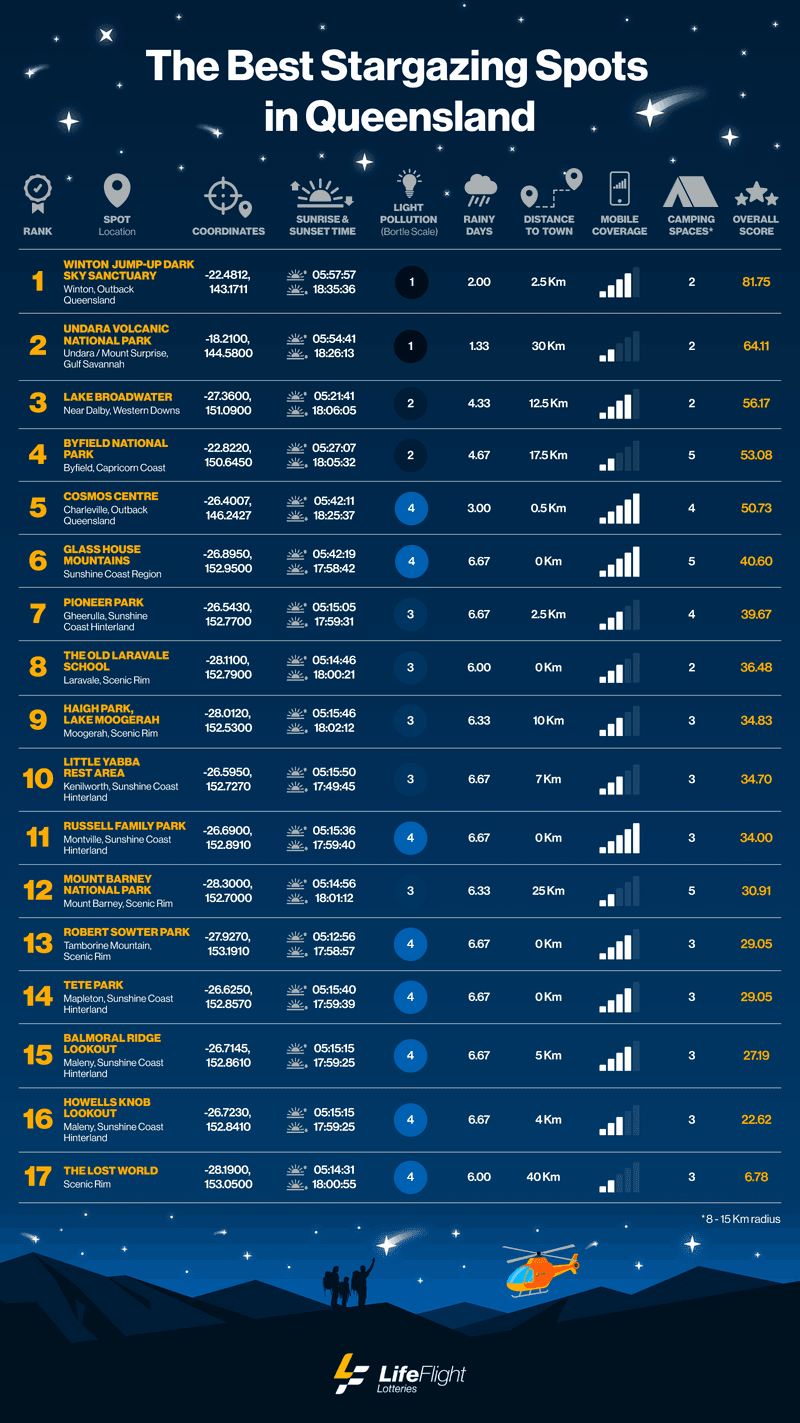
Queensland's Best Stargazing Spots
Curious how each destination compares? Explore the table below to see how Queensland's top stargazing spots ranked across key factors, from dark skies and weather conditions to camping, mobile coverage and accessibility.
Our Top Tips for Safe Stargazing Adventures
Queensland's darkest skies are often found in regional and remote areas, making a little preparation essential before setting off. These simple precautions can help make your adventure a safe experience:
Plan your trip before you leave - Research your destination, check road conditions and plan your route. Let a family member or friend know where you're going, when you expect to arrive and when you plan to return, especially if you're travelling to remote areas.
Check the weather forecast - Clear skies make for the best stargazing, but conditions can change quickly. Keep an eye on weather forecasts before you leave and be prepared to postpone your trip if severe weather is expected.
Carry plenty of supplies - Pack enough drinking water, food, warm clothing and a well-stocked first aid kit. Temperatures can drop significantly after sunset, particularly in inland and Outback regions, so dress in layers and be prepared for cooler conditions.
Be prepared for limited phone reception - Many of Queensland's best stargazing destinations have patchy or no mobile coverage. Download offline maps before you leave and don't rely on your phone for navigation or emergency communication. If you're travelling well beyond coverage, consider carrying a personal locator beacon (PLB) or satellite communication device.
Drive safely at night - Wildlife is often more active after dark, particularly on regional roads. Reduce your speed, stay alert and avoid driving while fatigued. If possible, arrive at your destination before sunset so you can set up camp in daylight.
Choose a safe place to camp - Only camp in designated areas where possible and follow any local park regulations. Familiarise yourself with your surroundings before nightfall, including nearby hazards such as uneven ground, waterways or steep drop-offs.
Pack the right gear - A reliable torch or headlamp with spare batteries is essential for moving around safely after dark. Comfortable footwear, insect repellent and a portable power bank can also make your trip safer and more enjoyable.
Respect the environment - Help preserve Queensland's incredible dark sky destinations by taking all rubbish with you, sticking to marked tracks and keeping noise and artificial lighting to a minimum. Red-light torches are a great option for preserving your night vision while reducing light pollution for others.
At LifeFligt Lotteries, we know some of Queensland's most unforgettable experiences are found beyond the city lights. Whether you're chasing dark skies in the Outback or setting up camp beneath the stars, every lottery ticket purchased helps support LifeFlight's critical care and aeromedical services. Those services provide lifesaving care to Queenslanders and visitors across regional and remote communities, helping ensure expert medical assistance is available when emergencies happen wherever the adventure takes you.
Methodology & sources
LifeFlight Lotteries analysed a selection of Queensland's most popular stargazing destinations using publicly available data to identify locations offering exceptional night sky viewing and visitor accessibility.
Sources:
Light Pollution - www.lightpollutionmap.info/
Climate Data - https://en.climate-data.org/
Mobile Coverage - www.telstra.com.au/coverage-networks/our-coverage
Camping availability - Google Maps
Sunrise-Sunset data - sunrise-sunset.org
These factors were weighted to produce an overall score, highlighting Queensland's top destinations for astro-tourism and stargazing.
All data was collected in July 2026.

We would love to hear from you
We would love to know what you think about LifeFlight Lotteries!


Customer Support
07 3065 9128
All times displayed in Australian Eastern Standard Time (AEST is UTC+10) unless stated otherwise. LifeFlight Lotteries is conducted on behalf of LifeFlight Foundation Ltd. (ABN 63 618 170 184). All prices are displayed in AUD. © Copyright TMS Global Services Pty Ltd. 2003-2023. ABN 22 089 771 835. All rights reserved.

Hi !
LogoutAvailable funds