
The Best Hiking Routes in Australia
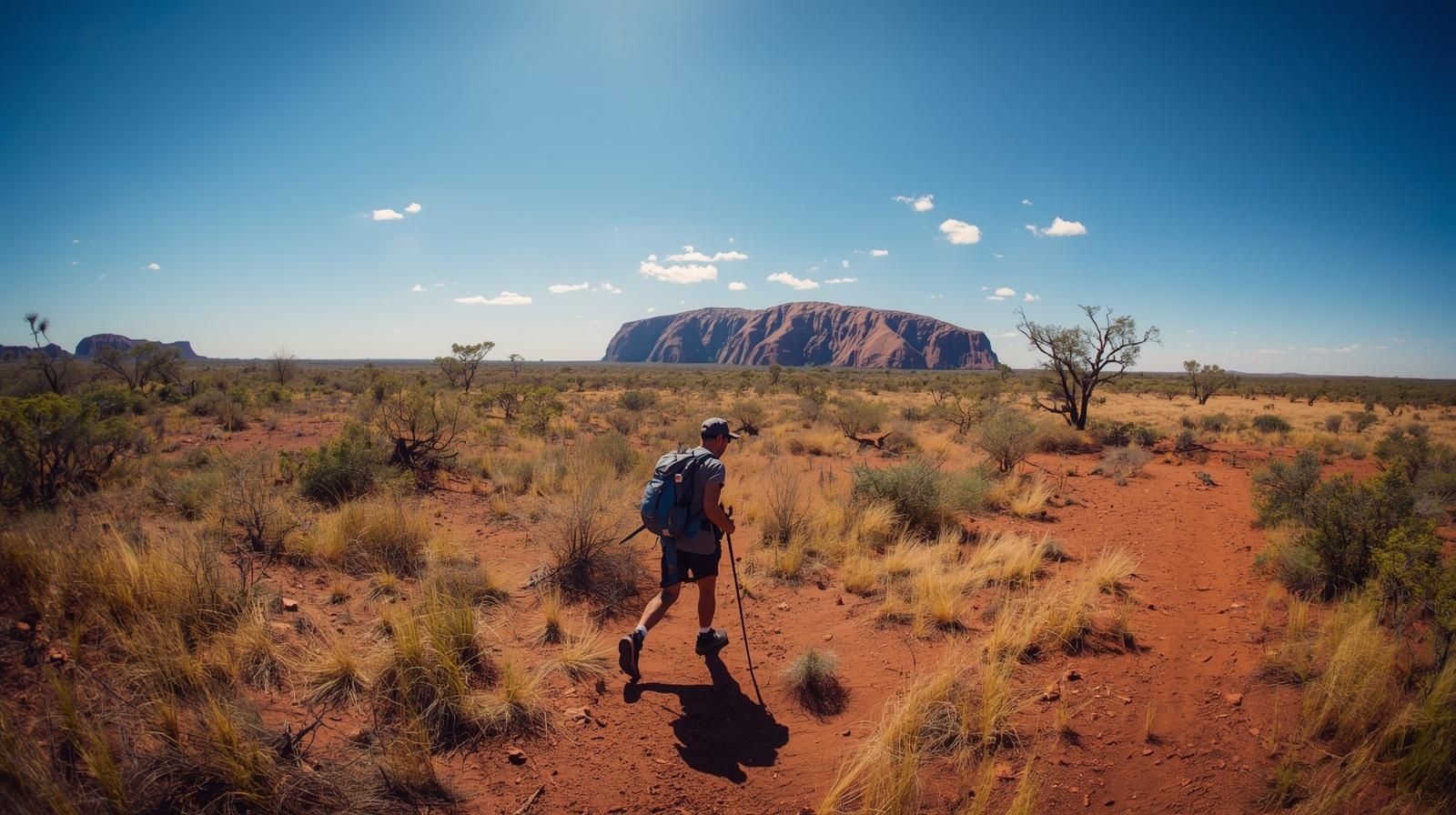
From coastal walks to desert-looking locations: Explore Australia’s best hiking trails
Australia is one of the world’s most diverse hiking destinations. From wave-carved coastlines and alpine ridgelines to sacred desert landscapes, its trails span every climate and terrain imaginable.
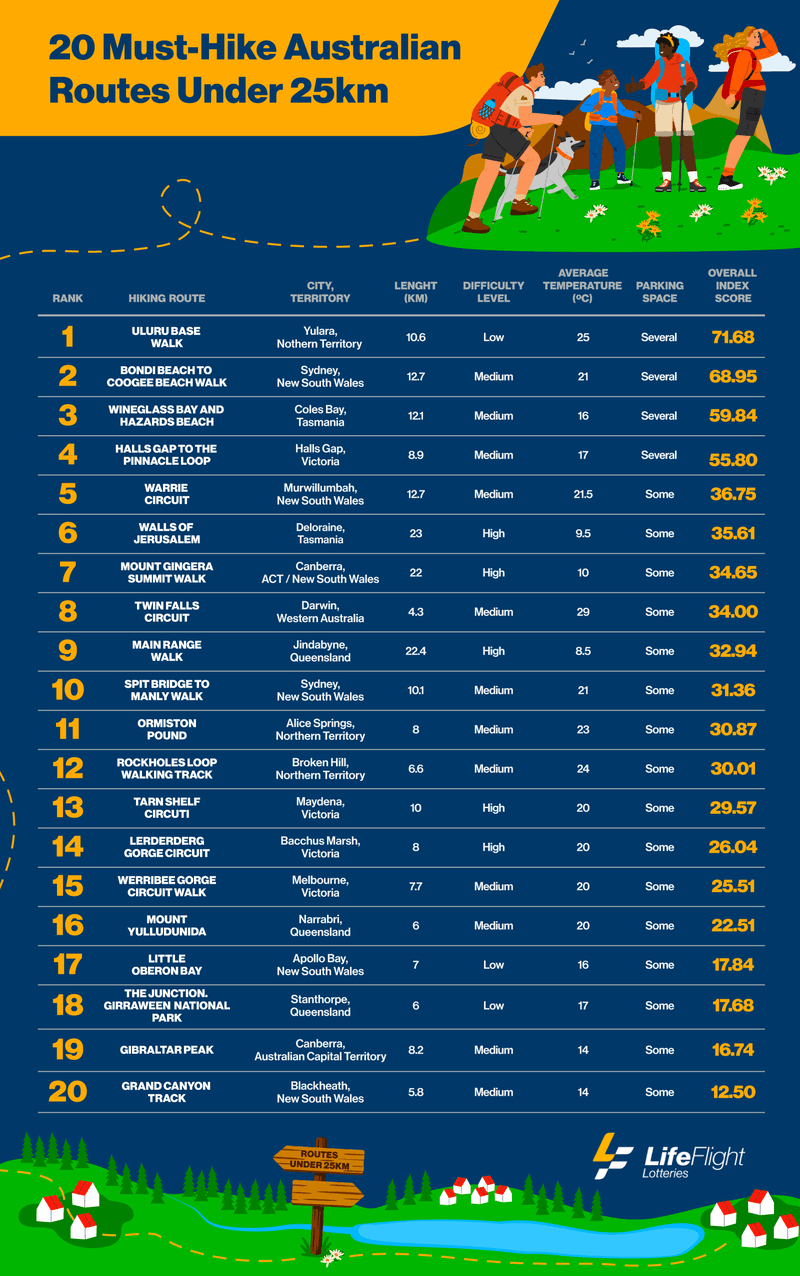
This guide brings together 33 of Australia’s most remarkable hiking routes, ranked using a data-driven approach that balances adventure with accessibility. We analysed distance, difficulty levels, average temperatures, parking access, campsite availability, and an overall performance index to identify the trails that truly stand out. Alongside the full rankings, we’ve also collated a dedicated list of hikes under 25 km, perfect for shorter adventures without compromising on scenery or experience.
Safety matters just as much as scenery, and that’s why we have complemented the research with expert-backed tips from our rescue team to help hikers stay prepared while exploring Australia’s wild places. From checking weather conditions and carrying enough water, to letting someone know your plans and understanding local terrain, they are designed to help you enjoy every escape with confidence.
If you’re dreaming of beautiful beaches while avoiding unnecessary risks, here is the official list and expert guidance to help you stay safe in the wild.
The top 5 hikes under 25 km you can’t miss
These shorter routes prove that you don’t need huge distances for unforgettable landscapes, from sacred desert landmarks to alpine summits and coastal classics.
1. Uluru Base Walk, 71.68/100
Stretching 10.6 km around Australia’s most iconic monolith, this low-difficulty loop in Yulara is the highest-ranked hike under 25 km. With an average temperature of 25°C and several parking access points, it’s designed for easy exploration. While there are no campsites along the route, the flat terrain and cultural landmarks make it an accessible yet powerful Red Centre experience, perfect for walkers seeking maximum impact with minimal distance.
2. Bondi Beach to Coogee Beach Walk, 68.95/100
Covering 12.7 km of dramatic coastline, this medium-difficulty Sydney classic blends golden beaches, clifftop paths, and ocean pools into one seamless journey. With an average temperature of 21°C and several parking options, it’s one of Australia’s most approachable urban hikes. Although there are no campsites, its compact length and lively seaside atmosphere make it ideal for a scenic day adventure.
3. Wineglass Bay and Hazards Beach, 59.84/100
This 12.1 km medium-grade loop in Coles Bay delivers some of Tasmania’s most recognisable views, combining elevated lookouts with pristine white-sand beaches. With average temperatures around 16°C, several parking areas, and some nearby camping options, it offers a balanced mix of comfort and wilderness, rewarding hikers with postcard-perfect panoramas over Wineglass Bay before descending to the quieter Hazards Beach.
4. Halls Gap to The Pinnacle Loop, 55.80/100
At just 8.9 km, this medium-difficulty circuit in Victoria’s Grampians packs serious scenery into a short distance. Averaging 17°C and supported by several parking access points, it climbs through rugged sandstone terrain to reach The Pinnacle lookout. With no campsites along the loop, it’s best suited as a rewarding half-day hike with sweeping valley views.
5.Warrie Circuit, 36.75/100
This 12.7 km rainforest circuit near Murwillumbah offers a medium-level challenge through lush subtropical terrain. With an average temperature of 21.5°C, limited parking, and some nearby campsites, it guides hikers past waterfalls, mossy gullies, and deep forest corridors, making it a refreshing escape for those craving immersive greenery and cooler shaded trails.
The 3 best Australian hikes you need to explore
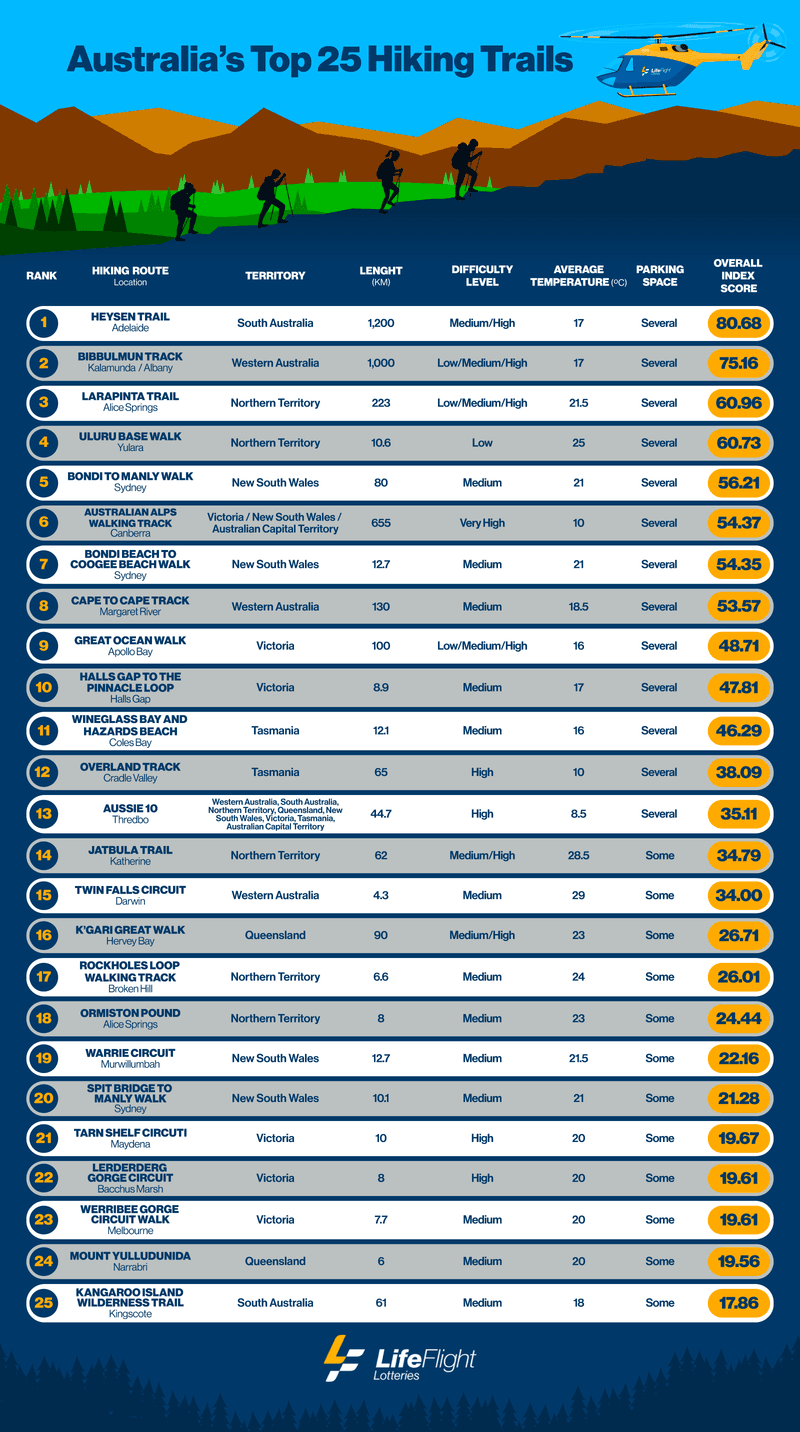
From thousand-kilometre wilderness journeys to iconic coastal walks and sacred desert landscapes, these hikes define Australia’s outdoor experience at its highest level.
1. Heysen Trail, 81/100
Stretching an epic 1,200 km from Adelaide into South Australia’s rugged interior, the Heysen Trail ranks as Australia’s top hiking route overall. With a medium–high difficulty level, average temperatures around 17°C, several parking access points, and an impressive network of 60 campsites, it’s designed for both section walkers and serious long-distance trekkers. Traversing farmland, bushland, and remote ranges, this trail delivers unmatched ecological diversity and infrastructure, making it the country’s most complete end-to-end hiking experience.
2. Bibbulmun Track, 75.16/100
Covering 1,000 km between Kalamunda and Albany, the Bibbulmun Track offers one of Australia’s most iconic thru-hiking journeys. Its flexible difficulty ranges from low to high, making it accessible to a wide variety of hikers, while average temperatures of 17°C and several trailhead parking options support year-round exploration. Although there are no campsites listed in this dataset, the route’s extensive hut system and well-maintained infrastructure guide walkers through towering karri forests, quiet countryside, and dramatic southern coastline.
3. Larapinta Trail, 60.96/100
Spanning 223 km across the West MacDonnell Ranges near Alice Springs, the Larapinta Trail delivers a true outback adventure. With difficulty levels ranging from low to high, average temperatures of 21.5°C, several access points, and 16 established campsites, it’s perfectly suited for multi-day trekking. Expect steep quartzite ridges, deep ochre gorges, and vast desert panoramas.
Expert recommendations to stay safe while exploring these routes
Drawing on extensive frontline rescue experience across the country, LifeFlight’s Medical Director, Dr Jeff Hooper shares this expert advice after responding to countless real-world emergencies helping you prepare properly, reduce risk, and enjoy your adventure safely.
- Be Prepared for Late-Summer Heat: March in Australia can still bring high temperatures, particularly in the Northern Territory, South Australia, Queensland, and parts of Western Australia. Even coastal and alpine areas can experience warm days. LifeFlight rescue teams regularly respond to dehydration and heat-related incidents, so start early, avoid peak afternoon heat, and carry more water than you think you’ll need.
- Watch for Sudden Weather Changes: While much of Australia remains warm in March, alpine and southern regions can experience rapid weather shifts, including cold fronts and strong winds. Conditions in Tasmania, the ACT, and the Australian Alps can change within hours. Pack layers, waterproof protection, and always check forecasts before heading out.
- Carry a Basic First Aid Kit: Minor injuries such as blisters, cuts or sprains can quickly become serious if untreated, particularly in remote environments. LifeFlight rescue professionals recommend carrying a compact first aid kit with essentials such as bandages, blister care, antiseptic and compression support. Being able to manage small injuries on the trail can prevent avoidable emergencies.
- Plan for Remote Conditions: Several top-ranked trails cross remote or semi-remote terrain where mobile reception may be limited or non-existent. LifeFlight teams advise hikers to download offline maps, inform someone of their route and expected return time, and consider carrying a personal locator beacon (PLB) on longer or isolated tracks.
- Stay Hydrated and Fuelled: In warm conditions, dehydration can escalate quickly. For day hikes under 25 km, carry at least 2–3 litres of water per person, and more in hotter regions. For multi-day hikes with campsites, map out reliable resupply points in advance and carry sufficient nutrition to maintain energy levels.
- Respect the Environment and Your Limits: March remains a busy travel period in many regions, increasing foot traffic on popular trails. Stick to marked paths, follow park guidelines, and assess your fitness honestly before attempting higher-difficulty routes. Many rescue call-outs stem from fatigue, slips, and underestimating terrain.
- Sun Protection Is Essential: UV levels remain high across most of Australia in March. LifeFlight rescue professionals strongly recommend wearing a wide-brim hat, SPF 30+ sunscreen, sunglasses, and protective clothing even on cooler or overcast days.
Methodology & sources
We began by identifying a selection of popular hiking routes across Australia. To determine the highest-performing trails, we analysed key factors including route length, difficulty level, average temperature, and parking availability. Each metric was indexed to enable direct comparison across all routes. Trails scoring strongly across these categories received higher overall ratings, calculated on a 100-point scale.
All data was collected in February 2026.

We would love to hear from you
We would love to know what you think about LifeFlight Lotteries!


Customer Support
07 3065 9128
All times displayed in Australian Eastern Standard Time (AEST is UTC+10) unless stated otherwise. LifeFlight Lotteries is conducted on behalf of LifeFlight Foundation Ltd. (ABN 63 618 170 184). All prices are displayed in AUD. © Copyright TMS Global Services Pty Ltd. 2003-2023. ABN 22 089 771 835. All rights reserved.

Hi !
LogoutAvailable funds